After some time at the cabin in Idaho, we headed with the dogs over to the Pacific coast with the intention of driving down to San Francisco to catch our flight to Seoul. We wanted to make the flight a direct one and as short as possible for the sake of the dogs. The process for preparing to have an animal flown to a foreign country is a story all by itself and not the subject of this posting, but let's just say the whole experience seemed to give us both gray hair.
The drive down, however, was certainly memorable. Starting with the Lewis and Clark National Park at Cape Disappointment in Washington, we headed south on Hwy 101 along the Oregon coast, catching some historical sites, such as Fort Stevens and Fort Clatsop, and some of the gorgeous beaches. Besides the beautiful scenery, what was truly nice about the Oregon coast is the liberal attitude towards dogs on the beaches. Many US beaches today do not allow dogs at all, but Oregon does on all the beaches (as near as we could tell), and on many they could be off the leash, as long as they are under your control. For our dogs, it was a sandy heaven.
We left ourselves enough time to explore some of northern California, focusing on the coast and the magnificent forests of Redwoods. California was a disappointment to the dogs, however. Most beaches did not allow dogs, nor were they allowed on the trails in the Redwood forests, meaning our tour through northern California was done largely through the windshield.
 |
| First stop was Cape Disappointment, Washington, which is part of the Lewis and Clark National and State Parks system. The Lewis and Clark party spent some time there in the winter of 1805-06 and may be responsible for the Cape's name. |
 |
| The Cape's commanding view of the Columbia River made it ideal for coastal defenses, first established during the Civil War, as well as a light house. |
 |
| We spent the night in lovely riverside Astoria, OR at the mouth of the
great Columbia River. That itself was worth the treat of a waterfront
room. |
 |
| We also visited Fort Clatsop, where Lewis and Clark and co. spent the
wet and miserable winter of 1805-1806. It has been reinvented as a
"national historical park" and as such has sadly lost much of its
original, i.e., historical, character. H was disappointed as it was
difficult to tell what, if anything, remained of the original site. The
big draw is the replica of the fort itself, which is okay as replicas
go, but must replicas always come with guides dressed in tired looking
period costumes? |
 |
| Across the Columbia River are other Lewis and Clark sites, as well as coastal defenses dating back to the 1860s. |
 |
| Coastal defenses at Fort Stevens from the Civil War. Erected at the mouth of the Columbia River to defend against possible Confederate raiders, the fort was not completed until the waning days of the war. Considering the minimal threat of Confederate ships attacking the Pacific Coast, the fort seemed a bit of overkill and a waste of money. These are 15-inch Rodman rifled cannons, which were certainly not cheap. |
 |
| Remake of a 200-pound Parrott rifled cannon. |
 |
| Later, more modern guns, like this 155mm mounted on a disappearing gun carriage, were added. It probably never fired a shot in anger. |
 |
| The fort's only enemy "action" was in June 1942 when a Japanese submarine fired 17 rounds at the fort. There was no damage to the fort, unless you count the backstop to the fort's baseball field. |
 |
| Modern-day Fort Stevens is a park and includes an interesting museum. |
 |
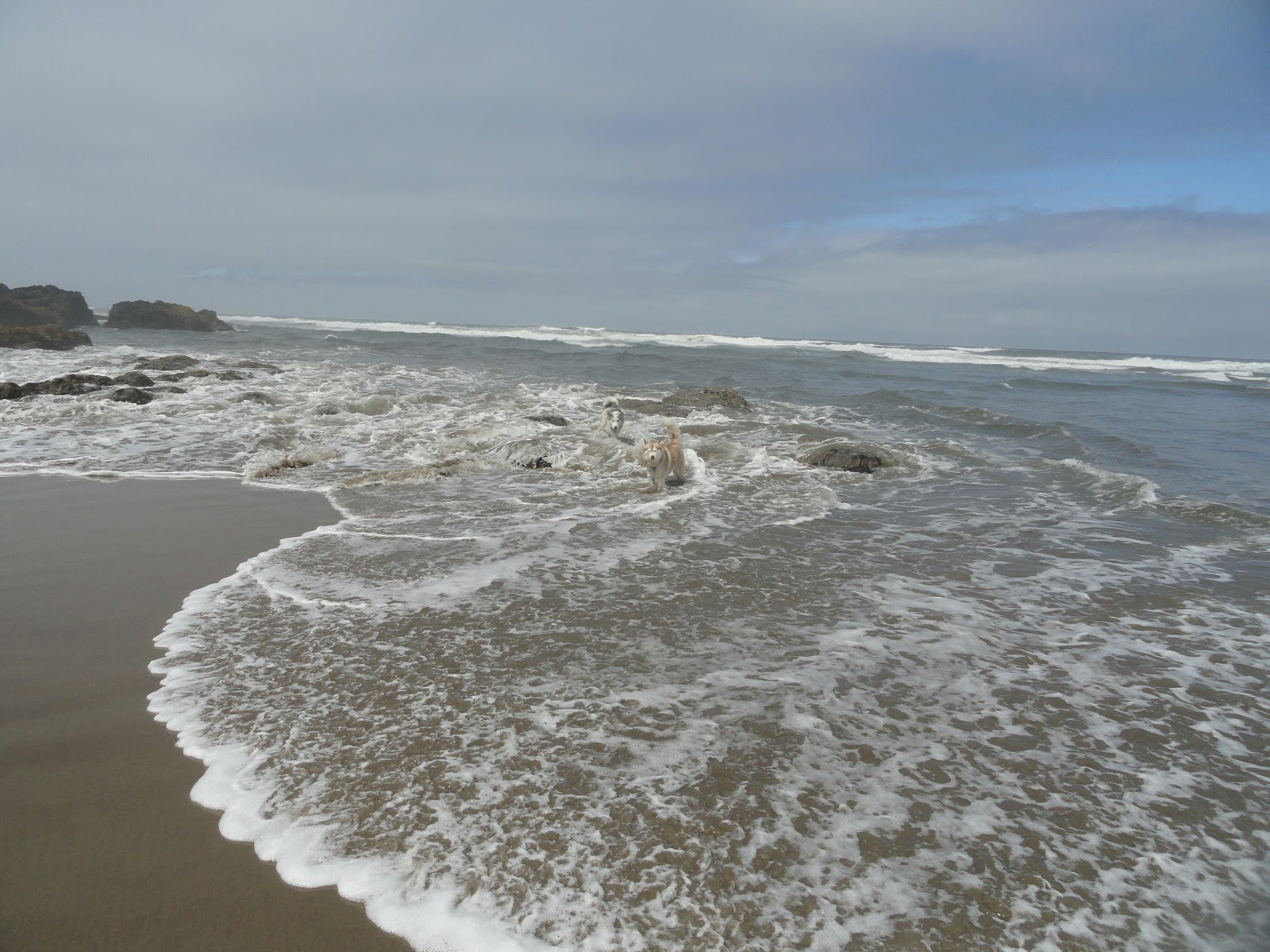
| Lewis and Clark and old forts did not do much for the dogs, but they perked up once we hit the Oregon beaches. I think you can actually see smiles on their faces. |
 |
| Comic relief: First time in the surf! |
 |
| I am a happy boy. |
 |
| While they loved the water, it was far too cold for us. |
 |
| The scenery more than made up for it, however. |
The Pacific Coast Redwood forests of Northern California were stunning. Photos simply do not give these magnificent trees justice. Neither did we. By the time we reached them we were anxious about the myriad details of our upcoming move and focused on mundane issues like acceptable dog kennel sizes for international travel and how to keep dogs hydrated over long haul flights. We also did not have enough time to adequately explore these groves.